
Two weeks in Colombia gives you enough time to experience several sides of the country, but only if you resist trying to see everything.
Distances are substantial. Mountains divide regions, domestic flights are often useful, and Bogotá, coffee country and the Caribbean each deserve more than a rushed overnight stop.
For a first visit, one of the strongest routes combines Bogotá, Colombia’s Coffee Region, Cartagena and a final Caribbean stay. You get history, food, mountain scenery, rural culture and coast without turning the holiday into a race between airports.
A sensible two-week route looks like this:
Days 1–3: Bogotá
Days 4–7: Coffee Region
Days 8–10: Cartagena
Days 11–13: Caribbean coast or islands
Day 14: Journey home
The exact order depends on flight schedules and where you want to finish, but the principle is simple: fewer bases, better experiences.
Days 1–3: Start in Bogotá
Bogotá makes a logical introduction to Colombia.
The capital sits high in the Andes and combines historic neighbourhoods with museums, restaurants, markets and a large contemporary city.
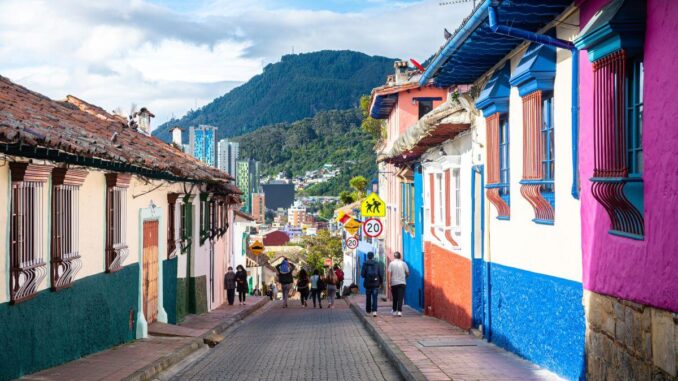
Start in La Candelaria (main image), Bogotá’s historic quarter. Plaza Bolívar provides a useful geographical and historical anchor, while the Gold Museum and Botero Museum are among the city’s major cultural attractions.
Three days gives you time to find your bearings rather than treating Bogotá as somewhere to sleep before flying elsewhere.
Depending on your interests, spend your time exploring museums and historic streets, sampling Colombian food or heading to a viewpoint over the capital.
Days 4–7: Slow down in Colombia’s Coffee Region
After Bogotá, the Coffee Region changes the rhythm completely.
Colombia’s UNESCO-recognised Coffee Cultural Landscape spreads across mountainous parts of Caldas, Quindío, Risaralda and northern Valle del Cauca. Coffee farms and towns sit among green Andean hills, making this as much a landscape destination as a food and drink experience.
Allow three or four nights.
Use one day for a coffee farm visit, where you can learn how coffee moves from plant to cup. Set aside another for Cocora Valley and one of the surrounding towns, such as Salento or Filandia.
Avoid packing every day with excursions. Staying somewhere with views across the hills and leaving an afternoon free is part of the appeal.
Days 8–10: Explore Cartagena
The move from the green Andes to Cartagena’s Caribbean heat provides one of the biggest contrasts of the trip.
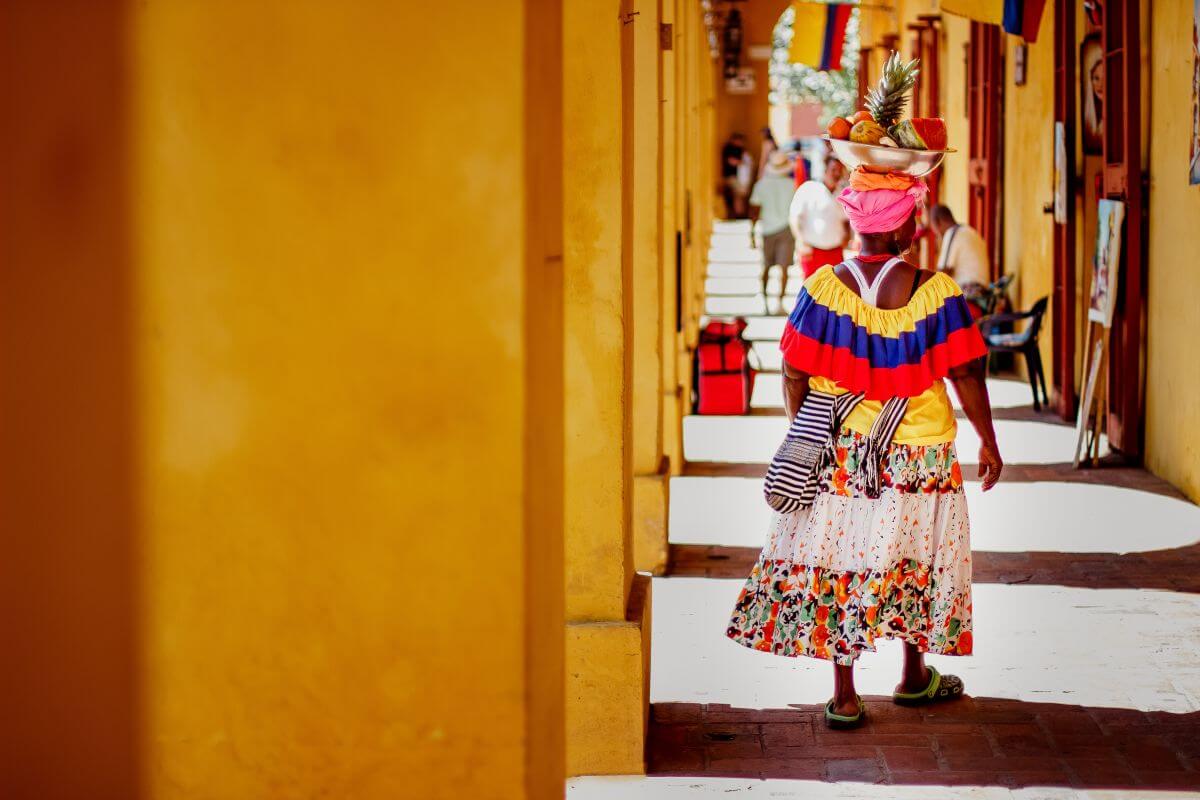
Cartagena is known for its historic architecture, colourful streets and Caribbean setting.
Spend your first day exploring the historic centre without trying to follow an exhaustive checklist. Squares, churches, walls, balconies and street life are a large part of Cartagena’s appeal.
Three nights also leaves room for slower mornings, long meals and evenings in the old city.
The heat changes the pace here. Starting early, taking a break during the hotter part of the day and returning outside later often feels better than continuous sightseeing.
Days 11–13: Choose your Caribbean ending
You now have a decision to make.
Do you want jungle and walking, or water and relaxation?
Option 1: Tayrona National Park
Choose Tayrona if you want your final days to remain active.
The national park combines tropical forest, mountains, wildlife and Caribbean beaches.
It works particularly well after Cartagena because the experience is so different. Instead of colonial streets and restaurants, your focus shifts towards trails, forest and coast.
Option 2: Rosario Islands
Choose the Rosario Islands if you want the end of the trip to be easier.
The islands off Cartagena are associated with beaches, clear water, coral reefs and snorkelling.
An overnight stay gives you more time to settle in than a quick day excursion.
After ten days of moving through Colombia, doing relatively little for the final few days is a perfectly reasonable itinerary decision.
Day 14: Travel home
Keep the final day simple.
Depending on international flight arrangements, you may need to return to Cartagena or Bogotá before travelling home. Build enough time into the itinerary to protect the international connection rather than creating a tight sequence of separate flights.
This is one place where a spare night can be more valuable than another attraction.
Is two weeks enough for Colombia?
Yes, for a first trip.
Two weeks is enough to experience several contrasting regions, but it is not enough to see Colombia comprehensively.
The mistake is trying to include Bogotá, Medellín, the Coffee Region, Cartagena, Tayrona, San Andrés and several smaller towns in the same fortnight.
Every additional destination creates another transfer, check-in and packing day.
Four main bases across 14 days usually produce a better trip than seven bases visited at speed.
Should you add Medellín?
Medellín is one of Colombia’s major destinations and deserves consideration.
Latin Routes describes the city as combining innovation, culture and a pleasant climate, with cable cars among its best-known urban features.
But adding Medellín to the route above means something else should come out.
If contemporary city life interests you more than beach time, consider:
Bogotá → Coffee Region → Medellín → Cartagena
If nature and the Caribbean matter more, keep the original route.
This is a better decision than squeezing Medellín between existing stops simply because it is famous.
Coffee Region or Medellín?
Choose the Coffee Region for:
- rural landscapes
- coffee farms
- Cocora Valley
- small towns
- slower travel
Choose Medellín for:
- urban culture
- restaurants and nightlife
- museums and neighbourhoods
- contemporary Colombian city life
Both are worthwhile. They answer different travel interests.
Cartagena or Tayrona?
This is another false choice for many travellers because the two combine well.
Cartagena offers history, architecture, food and city life. Tayrona offers forest, beaches and outdoor experiences.
If your itinerary allows three nights in Cartagena followed by two or three nights around Tayrona, you get both without making either stop feel tokenistic.
How should you travel around Colombia?
For a two-week itinerary, domestic flights save substantial time between distant regions.
Road travel still makes sense within regions, especially when connecting nearby towns or travelling through coffee country.
A sensible trip therefore mixes:
- domestic flights for major geographical jumps
- road transfers for regional journeys
- walking and local transport once you arrive
Do not judge the itinerary purely by distance on a map. Colombia’s mountains make some overland journeys slower than they first appear.
Should you plan independently or use a specialist?
Independent planning works well if you are comfortable coordinating domestic flights, accommodation and regional transfers.
A tailor-made trip becomes more attractive when you want several regions but do not want to manage every connection yourself.
For comparison, Latin Routes’ Colombia holidays include itineraries linking Bogotá, the Coffee Region and Cartagena, alongside alternatives incorporating Medellín, Tayrona, the Llanos and Colombia’s islands. Their Classic Colombia itinerary uses Bogotá, Villa de Leyva, the Coffee Region and Cartagena as the backbone of a 13-day trip.
That does not mean you need an organised trip. It provides a useful benchmark for how much ground a professionally planned Colombia itinerary attempts to cover in roughly two weeks.
When is the best time for a two-week Colombia trip?
Think regionally rather than looking for one perfect month.
Colombia’s altitude and geography mean conditions differ between Bogotá, the Andes and Caribbean coast. If your itinerary crosses several regions, expect weather changes along the way.
Pack accordingly. Clothing suitable for Bogotá may feel excessive on the Caribbean coast, while light beach clothing alone will not cover every part of the journey.
What should UK travellers know before visiting Colombia?
British citizens visiting for tourism can currently stay for up to 90 days without a visa, subject to approval by Colombian immigration on arrival. You should have an onward or return ticket within that period.
The FCDO advises against travel to certain areas of Colombia. Check current guidance when planning your route and again before departure, since regional advice changes.
